
Wide-Body or Factory Line? An Honest Trade-off
Overfenders photograph brilliantly. Here is what to weigh before committing a Land Cruiser or LX to a wide-body direction.
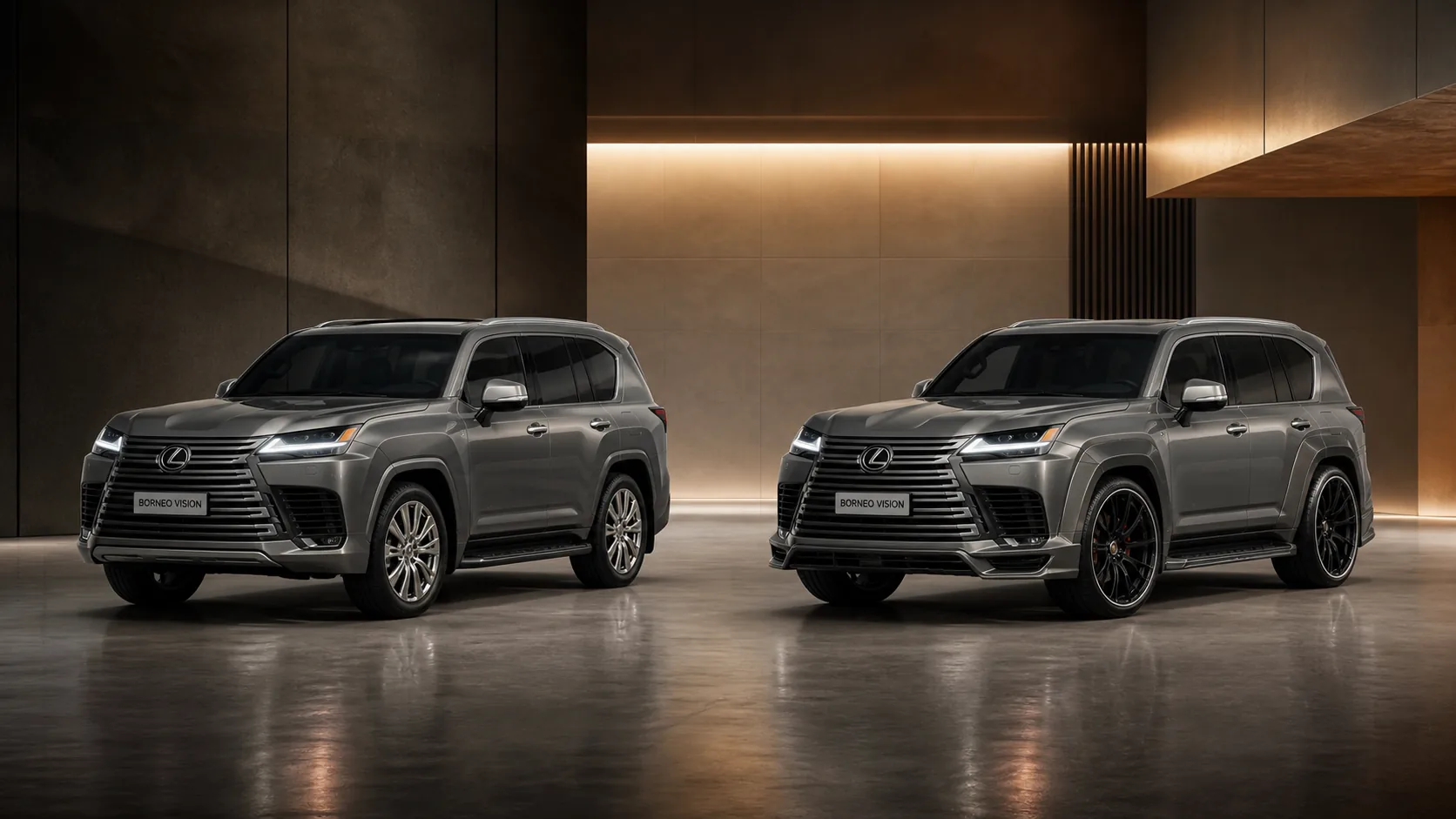
What wide-body actually buys you
Width reads as presence. A well-executed overfender package plants the vehicle visually, permits a wider wheel set, and gives large SUVs the stance their height promises. On platforms like the Land Cruiser 250 or LX, even a modest widening changes the whole attitude.
What it costs beyond money
Wide-body work is commitment: arch preparation, paint across more panels, and wheel geometry that must be planned rather than improvised. Parking clearances shrink; some owners also prefer keeping the option to return to stock, which widening complicates.
The honest question is not 'does it look good' — it usually does — but 'will I still want this specific statement in three years'. If the answer wavers, the factory-line direction with disciplined stance and finish delivers most of the presence with none of the commitment.
A middle path
Several catalogue directions take a 20–35 mm approach: enough width to matter, subtle enough to keep the vehicle believable. Ask us to compare the narrow and full-width options for your platform at quotation — the difference is clearer on your exact car than in any gallery.